A practical 2026 guide to beer styles Indian drinkers are likely to see more often, from lager and wheat beer to IPA, stout, session beer, and low/no-alcohol options.
Top Beer Styles to Know in India in 2026
A practical 2026 guide to beer styles Indian drinkers are likely to see more often, from lager and wheat beer to IPA, stout, session beer, and low/no-alcohol options.
Beer in India is moving beyond strong vs light
Beer conversations in India are becoming more specific. Instead of choosing only between a familiar lager and a strong beer, drinkers can now compare aroma, bitterness, body, sweetness, serving temperature, and the kind of meal or gathering a beer suits.
That wider choice is useful, but it can also make a shelf look confusing. The easiest way to begin is to understand the style in the glass first, then look at the brand, alcohol by volume, pack size, and local price.
Lager: the familiar starting point
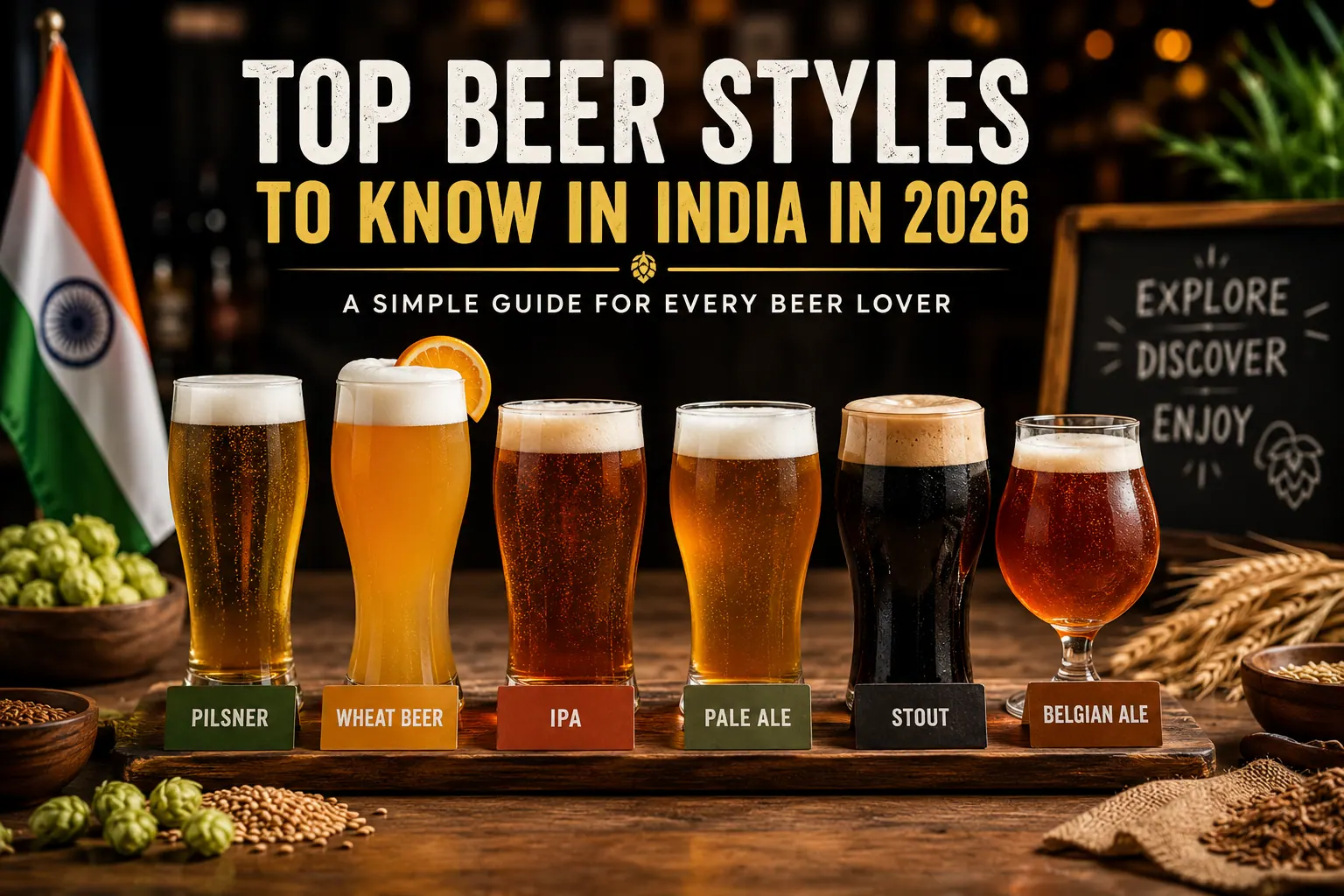
Lager is usually the most approachable starting point because it is clean, crisp, and easy to pair with everyday food. A lighter lager may show gentle grain, mild bitterness, and a dry finish, while a stronger lager can feel fuller and warmer without changing the basic style completely.
Serve it well chilled, but do not rely on cold temperature to hide every flavour. Once the beer warms slightly, its malt character and bitterness become easier to notice. That makes lager a useful reference point for comparing other styles.
Wheat beer: soft and beginner-friendly
Wheat beer often feels rounder and softer than a very crisp lager. Depending on the recipe, it may bring bread-like malt, citrus, gentle spice, or a fuller foam texture. Those features can make it comfortable for someone who finds bitterness difficult at first.
Wheat beers work well with lighter meals, grilled food, salads, and dishes that have fresh herbs or citrus. The style is not one single flavour, so reading the label and tasting slowly matters more than choosing by colour alone.
IPA: hops, aroma, and bitterness
IPA is defined more by hop expression than by a single colour or strength. Citrus, tropical fruit, pine, herbs, and floral notes can all appear, and bitterness may range from restrained to assertive. A modern IPA can therefore taste very different from an older, more bitter example.
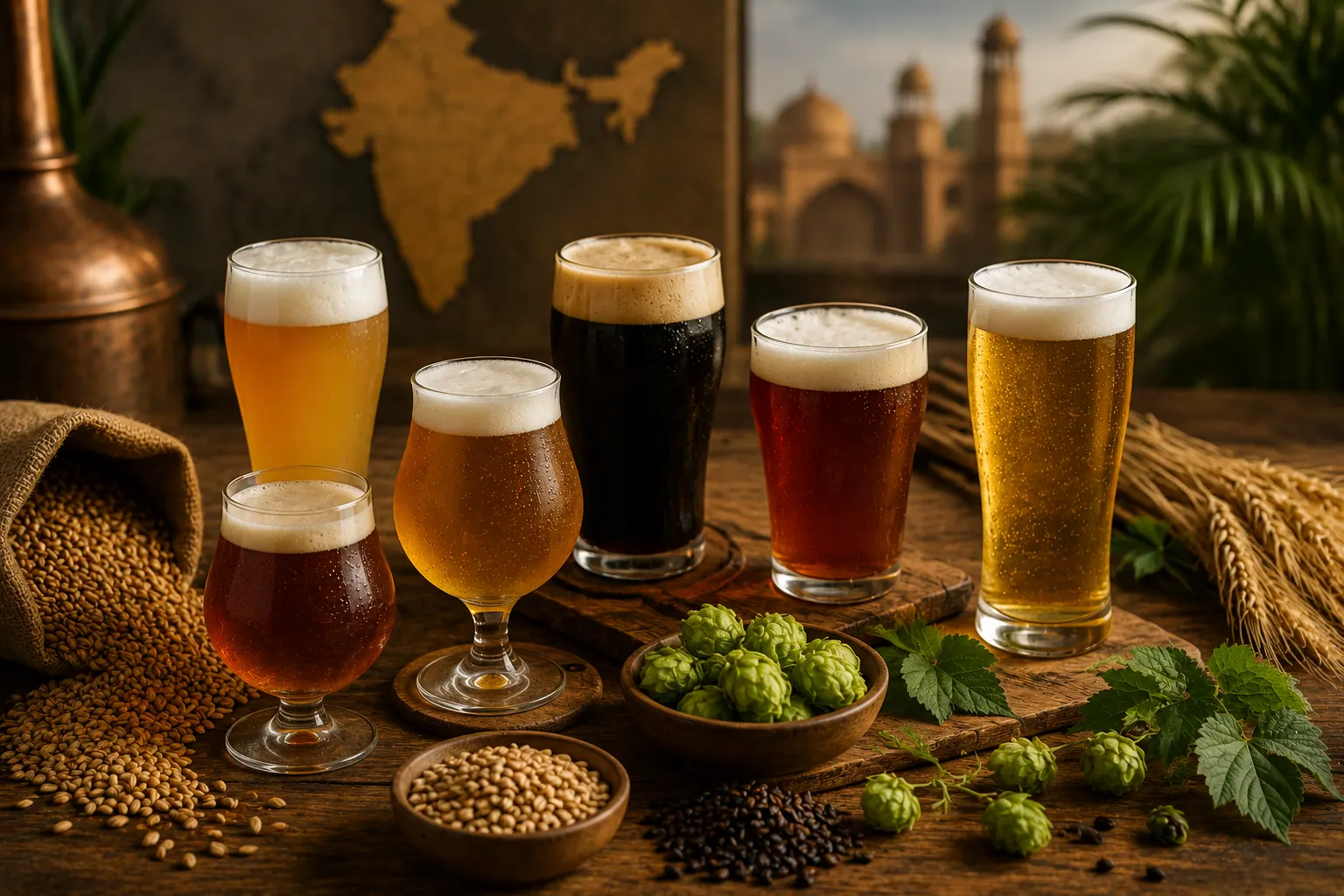
If you are new to IPA, begin with a smaller pour and pay attention to aroma before the first sip. Food with some richness or spice can balance bitterness, but very delicate dishes may be overwhelmed by a highly hopped beer.
Stout and porter: dark does not always mean stronger
Dark colour mainly tells you that darker malts have been used; it does not automatically tell you the alcohol level. Stout and porter may show coffee, cocoa, toast, caramel, or roasted grain, with texture ranging from dry and light to rich and creamy.
A dark beer can be enjoyable with roasted food, desserts, or strong cheese, but the pairing should match the beer body. Look for the actual ABV and serving size rather than assuming that colour alone predicts intensity.
Strong beer: popular, but read ABV
Strong beer has a familiar place in the Indian market, yet the phrase describes alcohol strength rather than one precise flavour style. Two strong beers can differ in sweetness, bitterness, carbonation, and malt character.
The practical habit is to read ABV before choosing a pack, especially when comparing different bottle or can sizes. A larger serving and higher ABV together can change the amount of alcohol considerably, even when the drink feels easy to consume.
Session beer: easier drinking for longer settings
Session beer is generally designed around a more moderate strength and an easy, repeatable profile. It can be a lager, pale ale, wheat beer, or another style, so the word session is not a guarantee of one particular taste.
It may fit a long meal or conversation because the flavour can stay present without becoming heavy. That does not remove the need for measured choices; the total amount still depends on serving size, pace, and the number of drinks.
Low/no-alcohol beer: read the label carefully
Low- and no-alcohol beers are not all identical. Some are made to be 0.0 percent, some contain a small amount of alcohol, and some focus mainly on replicating malt and hop character. The label is the reliable place to check what a particular product states.
These options can be useful for people who want a beer-like serve without choosing a regular-strength beer, but personal, medical, religious, workplace, and legal requirements differ. Treat the label as part of the decision rather than relying on marketing language.
How to choose by food and occasion
For a first comparison, pair a crisp lager with salty snacks, a wheat beer with lighter food, and a darker beer with roasted or sweet flavours. A hop-forward beer may suit richer dishes that can stand up to bitterness, while a lower-strength option may suit a longer meal.
For a gathering, offer more than one style and make the choices visible. Include water and non-alcoholic options, and avoid making strength the centre of the menu. The best beer choice is the one that fits the people, food, pace, and local context.
Quick beer style checklist
Before choosing, check the style, ABV, serving size, bitterness or flavour description, food context, and city-specific price or availability. A short note on what you want from the drink is often more useful than chasing a familiar label.
PourBud provides discovery and price context. It does not sell or deliver alcohol, and listings can change by city, retailer, and time.