A 2026 guide to spritz cocktails, why lighter sparkling serves are popular, and how to think about Hugo, Aperol-style, and simple home variations.
Spritz Cocktails in 2026: Hugo, Aperol, and Lighter Party Serves
A 2026 guide to spritz cocktails, why lighter sparkling serves are popular, and how to think about Hugo, Aperol-style, and simple home variations.
Why spritz drinks feel lighter and social
A spritz is usually a long, sparkling drink with a wine, aperitif, or spirit component balanced by bubbles and often citrus. The extra volume and bright aroma can make it feel lighter than a short, concentrated serve, though the alcohol content still depends on the measured ingredients.
Spritz drinks suit shared food and warm-weather settings because they are easy to build and visually clear. A good version is balanced, not simply sweet or overloaded with ice.
What makes a spritz
The basic structure is a flavourful base, a sparkling element, and enough dilution to make the drink comfortable to sip. Citrus, herbs, fruit, or an aromatic garnish can add lift, but they should support the base rather than cover it.
Use chilled ingredients and pour in a way that protects the bubbles. Stir gently instead of shaking carbonated mixers.
Aperol-style orange bitter spritz
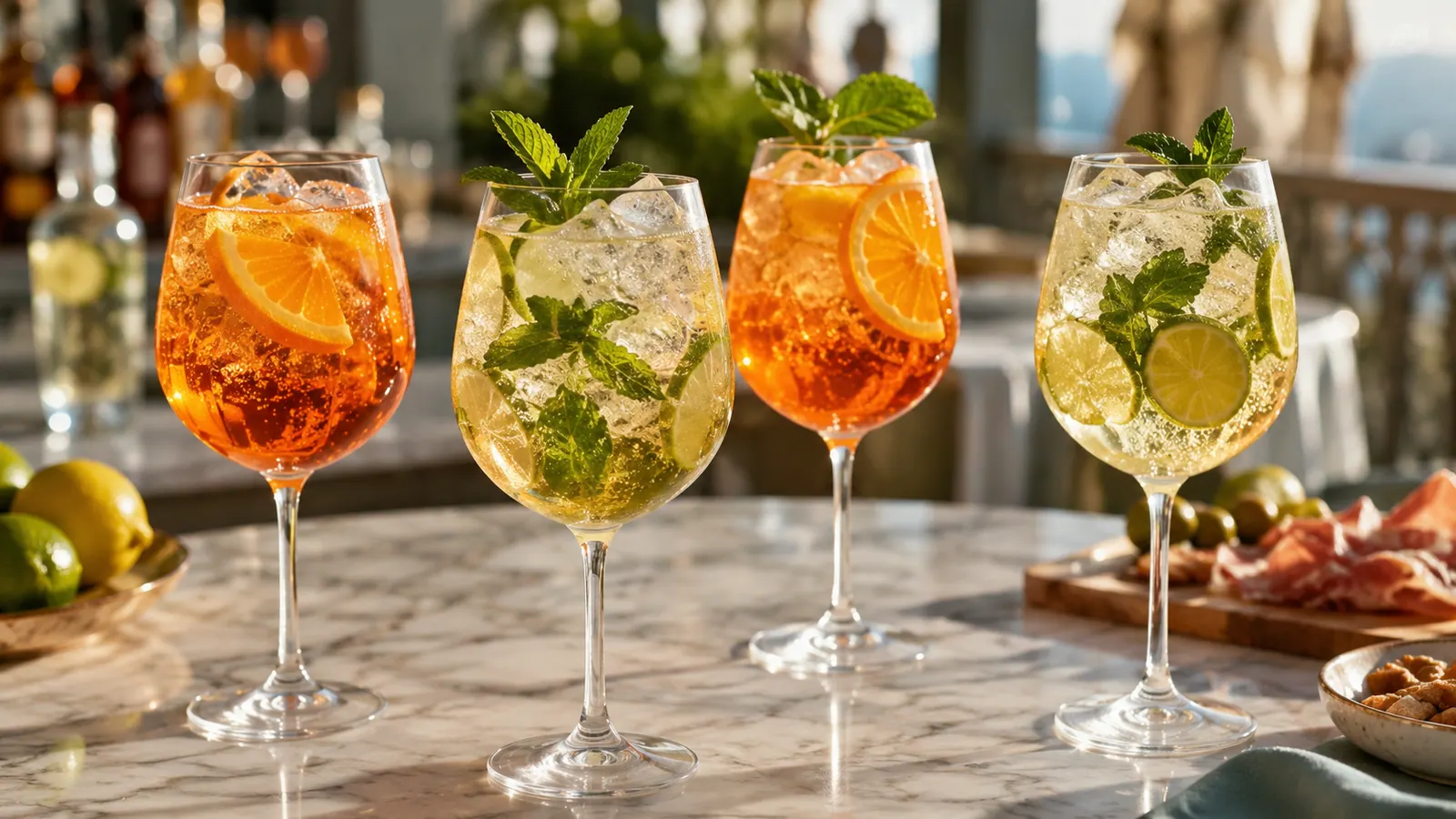
An orange-bitter spritz combines a bright citrus aroma with a gentle bitter edge and sparkling length. The balance depends on how much sweet aperitif, sparkling wine, and soda are used, so taste the first glass before preparing more.
Orange peel can be more useful than a large fruit garnish because it brings aroma without adding much juice. Pair it with salty snacks or light starters.
Hugo-style mint and floral spritz
A mint and floral spritz leans fresh and fragrant. Elderflower-style sweetness, mint, lime, and bubbles create a softer profile than a bitter orange version, but the drink can become cloying if the sweet element is too heavy.
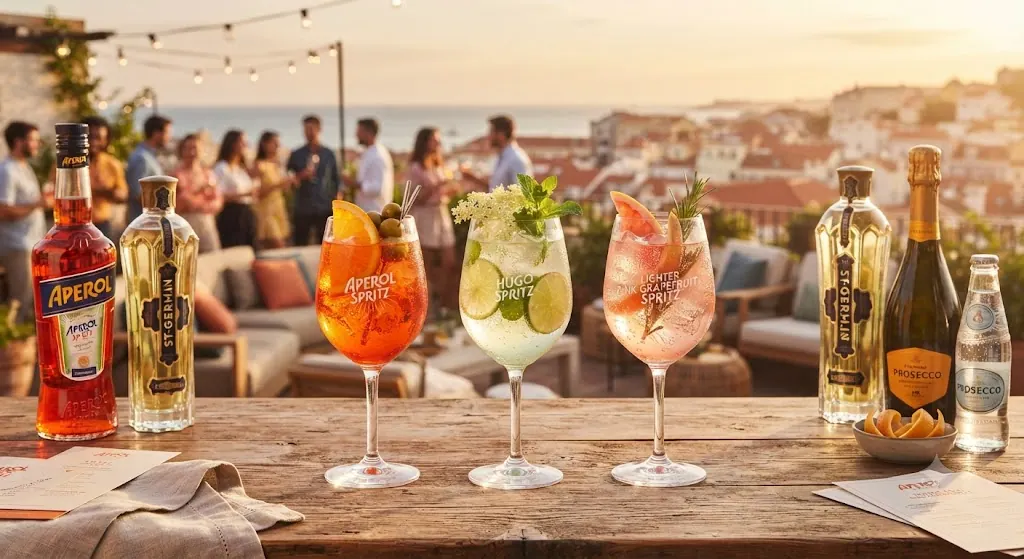
Use a small amount of mint and a clean lime note. Soda helps lengthen the serve and keep the flavour from feeling dense.
Citrus spritz
Lemon, grapefruit, orange, and blood orange can each create a different spritz direction. Lemon is sharper, grapefruit is more bitter, and orange tends to feel rounder. Select one main citrus rather than mixing every fruit available.
If using juice, add it gradually and keep the sparkling ingredient cold. The finished drink should taste fresh rather than like a sweet fruit punch.
Gin spritz
Gin gives a spritz more botanical structure. A clean gin, soda, sparkling wine, and citrus peel can be enough, while cucumber, mint, or a small berry note can take it in another direction.
Keep the spirit portion measured and avoid stacking several strong ingredients. The drink should remain easy to understand, not become a long list of alcohol.
Non-alcoholic spritz-style serve
A non-alcoholic spritz can use citrus, herbal syrup, bitter-style soda, tonic, and sparkling water. The same glassware and garnish can make it feel like part of the menu rather than a separate compromise.
Label the ingredients clearly so guests know what they are choosing. A balanced alcohol-free serve can be complex without imitating a stronger drink exactly.
Food pairing and party context
Spritz drinks work beside small plates, fried snacks, grilled vegetables, seafood, and bright salads. Bitter or citrus-led versions can refresh rich food, while sweeter versions may suit salty or spicy bites.
For a gathering, pre-chill ingredients, prepare garnishes, and offer water and alcohol-free options. A short recipe card helps guests make measured, repeatable drinks.
Mistakes to avoid
The common problems are too much sweetness, warm sparkling ingredients, crushed ice that melts quickly, and an unmeasured spirit pour. Fix one variable at a time instead of adding more garnish or mixer.
A spritz should invite a slow sip, not hide its strength. Keep the recipe transparent and choose a pace that suits the people sharing it.