A beginner-friendly guide to cocktail mixers and how tonic, soda, ginger, cola, citrus, and juice change gin, vodka, rum, and whisky serves.
Cocktail Mixers Guide: Tonic, Soda, Ginger, Cola, and Citrus Explained
A beginner-friendly guide to cocktail mixers and how tonic, soda, ginger, cola, citrus, and juice change gin, vodka, rum, and whisky serves.
Mixers change the whole drink
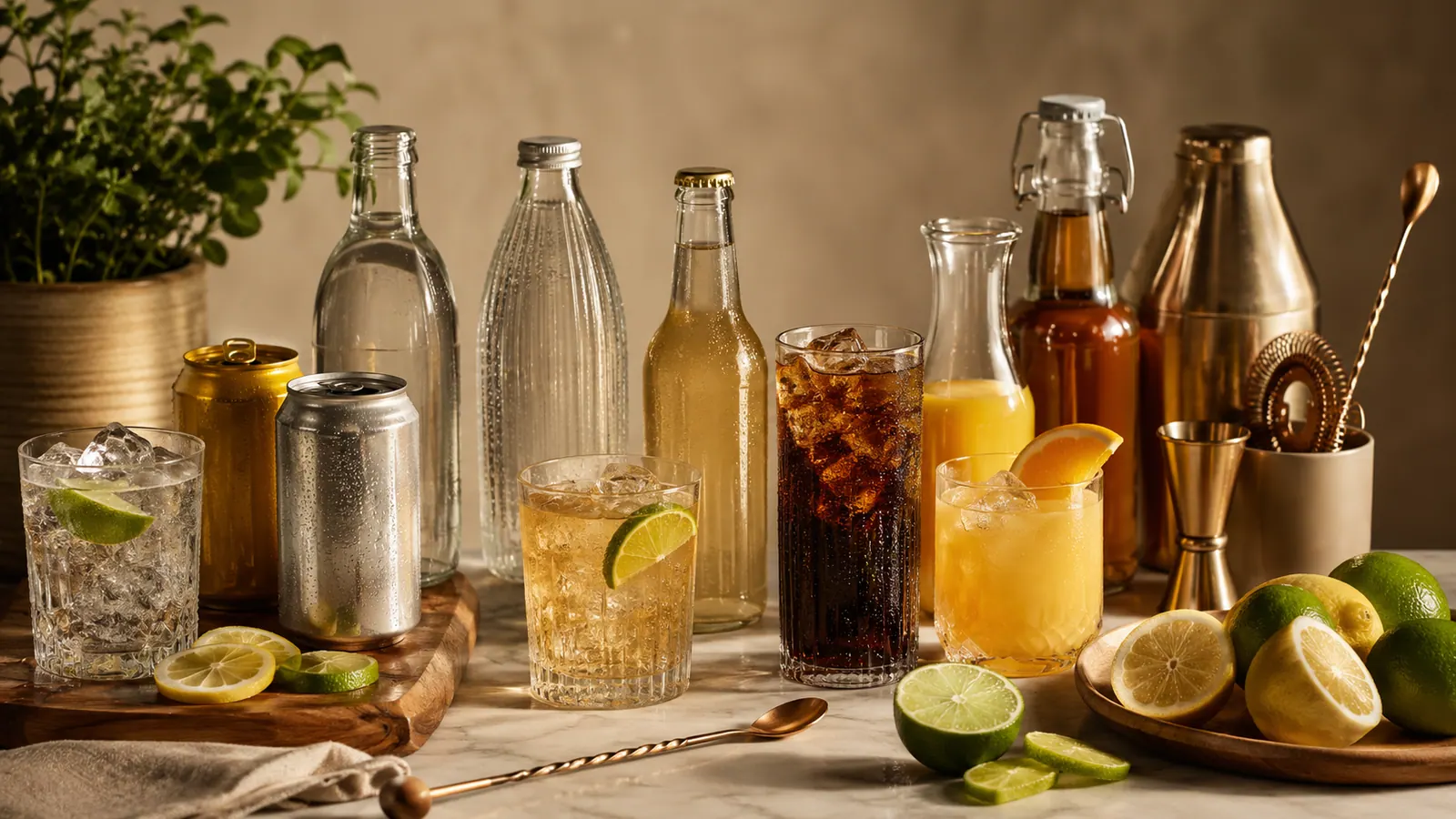
A mixer controls sweetness, acidity, bitterness, dilution, texture, and carbonation. That is why the same spirit can taste completely different when paired with soda, tonic, ginger, cola, citrus, or juice.
Start with the spirit and the mood of the serve. A mixer should support the base, not simply make the drink bigger or sweeter.
Tonic water
Tonic brings bubbles, sweetness, and a distinct bitter quinine-like profile. It can make a botanical gin feel brighter, but the balance depends on the tonic itself and the amount used.
Try a smaller mixer ratio first, then add more if the drink is too concentrated. Citrus peel can lift the aroma without adding a large amount of juice.
Soda water
Soda water is the cleanest way to lengthen a spirit without adding much flavour. It works when you want the base to remain visible and can be paired with citrus peel, herbs, or a small splash of juice.
Because soda does not hide the spirit, measure the pour and use fresh carbonation. A simple highball can show more detail than a complicated recipe.
Ginger ale and ginger beer
Ginger ale is usually softer and sweeter, while ginger beer often brings stronger spice and heat. Both can work with rum, whisky, and gin, but the choice changes the whole direction of the drink.
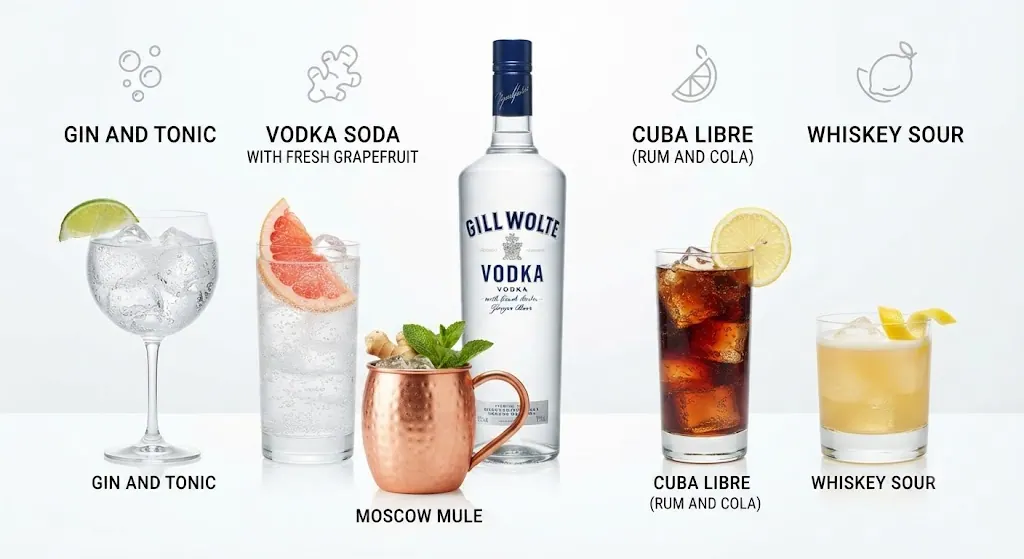
Add lime carefully. Too much acid can fight the ginger, while too much sweet mixer can make the drink feel heavy.
Cola
Cola brings sweetness, spice, caramel, acidity, and strong aroma. It pairs naturally with rum and can also work with whisky, but it may cover a delicate spirit completely.
Use ice and a measured base pour, then taste before adding more cola. Lime or a small citrus peel can create a cleaner finish.
Citrus
Lemon, lime, grapefruit, and orange add acidity and aroma. Citrus can balance sweetness, lift a spirit, or create a more refreshing finish, but juice should be added gradually because acidity changes quickly.
Peel and juice are not interchangeable. Peel adds aroma, while juice changes structure and dilution.
Juice
Pineapple, apple, cranberry, tomato, and other juices add body and sweetness. They can make a spirit easier to drink, which is useful for flavour but also means the alcohol may be less obvious.
Choose unsweetened or less-sweet options where appropriate, balance with soda or citrus, and keep the base measured.
Matching mixers with gin, vodka, rum, and whisky
Gin often suits tonic, soda, citrus, cucumber, and herbs. Vodka can carry citrus, ginger, soda, and fruit. Rum works with cola, ginger, pineapple, and lime, while whisky can pair with soda, ginger, cola, apple, or a small amount of citrus.
These are starting points, not rules. The bottle, the recipe, and the food determine the final balance.
Common mixer mistakes
Common problems include using warm ingredients, adding too much syrup, mixing too many flavours, skipping measurement, and treating a large glass as permission for a larger pour. Fix the structure before adding decoration.
For a gathering, write down the recipe and keep alcohol-free versions available. A simple, repeatable drink is easier to serve responsibly.
A better way to experiment
Change one element at a time: spirit, mixer, citrus, sweetness, or dilution. Taste the result and keep a note in plain language. This approach teaches you more than adding five ingredients at once.
Keep the final drink transparent to anyone receiving it. People should know what is in the glass and be free to choose something else.