A practical guide to building a balanced house party drinks menu with beer, spirits, mixers, food, water, non-alcoholic options, and responsible planning.
How to Build a Responsible Drinks Menu for a House Party
A practical guide to building a balanced house party drinks menu with beer, spirits, mixers, food, water, non-alcoholic options, and responsible planning.
A good party menu is not about buying more
A thoughtful drinks menu gives guests clear choices and makes the evening easier to manage. More bottles do not automatically create a better gathering; variety, food, water, and a comfortable pace matter more.
Start with the people and the setting. A small dinner, a long afternoon, and a late-night celebration may need very different menus.
Start with guest count and duration
Write down the number of guests, how long the event will last, and whether everyone will drink alcohol. This prevents the common mistake of planning from a bottle count without understanding the evening.
Use measured servings and avoid treating every guest as if they want the same drink. A menu with two or three styles is usually easier to explain than a crowded collection of labels.
Balance beer, spirits, mixers, and non-alcoholic options
Beer can provide an easy self-serve option, while a measured spirit menu can offer one or two simple mixed drinks. Non-alcoholic beer, soda, sparkling water, juices, and other alcohol-free choices should be visible from the start.
A guest should not have to justify choosing water or an alcohol-free drink. Good hospitality makes every option feel intentional.
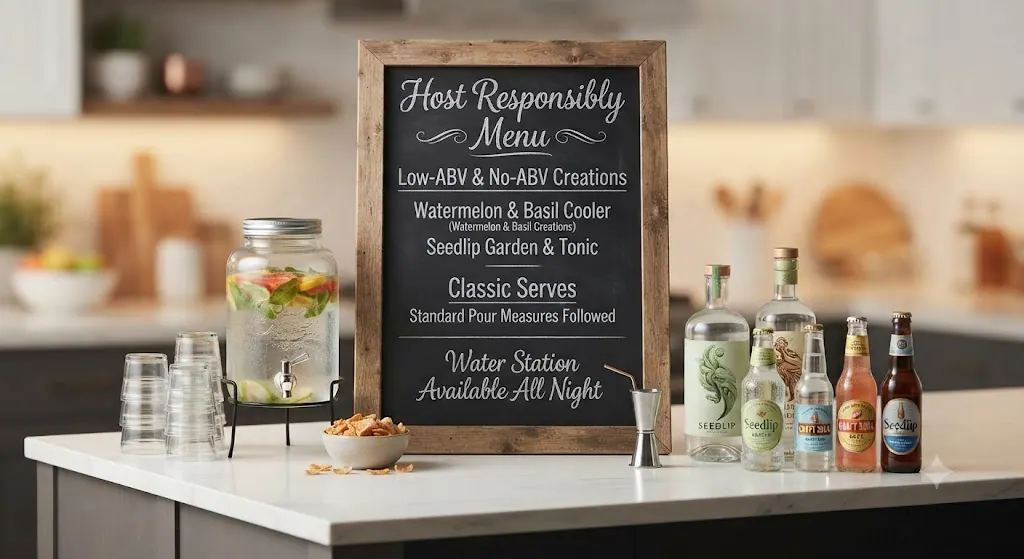
Food and water are part of the menu
Salty, spicy, grilled, and filling foods can make a gathering feel complete, while water helps guests pace themselves. Food is not a way to cancel alcohol; it is part of a more comfortable evening.
Put water in the same place as the other drinks and refresh it throughout the event. A visible choice is easier to make than a reminder offered only after someone feels unwell.
Measured pours for spirits
Use a jigger or another consistent measure for vodka, gin, rum, whisky, and other spirits. Large glasses can make a drink look smaller than the amount of alcohol actually poured.
Keep the recipe cards simple and label the ingredients. Guests can then make a drink they understand instead of repeatedly adding spirit because the flavour feels weak.
Build a simple drinks table
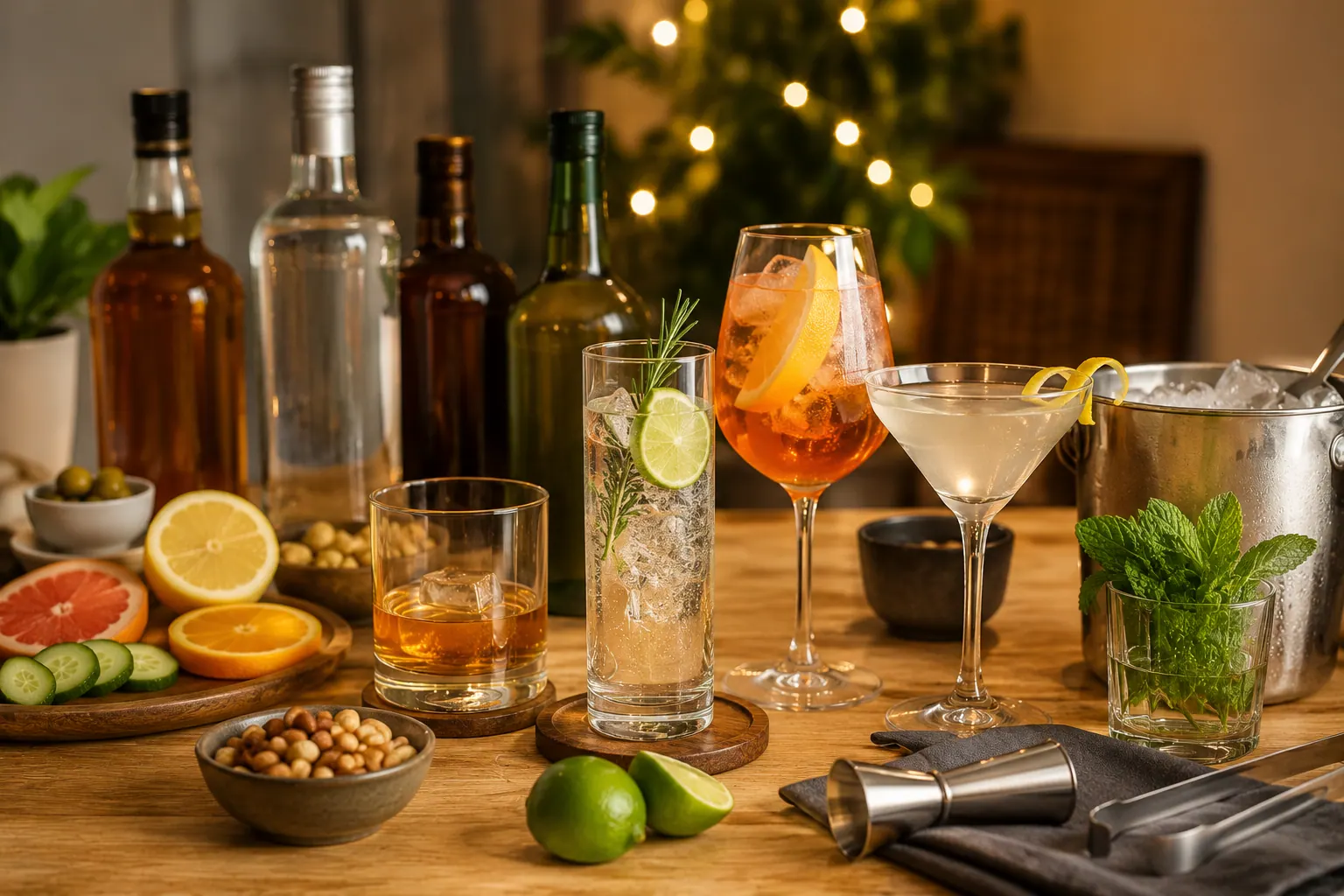
Place the base drinks, mixers, ice, garnishes, glasses, water, and alcohol-free choices in an order that is easy to follow. One gin serve and one rum serve are often enough for a mixed menu.
A host can also prepare a small batch of a non-alcoholic option so guests do not have to assemble a separate drink while everyone else is being served.
Planning by budget without overbuying
A budget is easier to manage when it is divided by guest experience rather than by the most expensive bottle available. Compare like-for-like volumes, note city-specific prices, and leave room for mixers, food, water, and transport.
Prices and availability can vary by city and time. A catalogue is useful for discovery, but current local retailer information is needed for a final purchase decision.
Safety and ride-home planning
Decide before the party how guests will get home. Keep keys away from anyone who should not drive, make ride options easy to find, and never encourage a guest to finish a drink before leaving.
A responsible host pays attention to pressure, pace, and comfort. The event should remain social even when someone chooses not to drink.