
An educational guide to India’s regional drinks, focusing on Feni, Toddy, local context, responsible discovery, and why legality and availability vary.
Feni, Toddy, and India’s Regional Drinks: A Beginner Guide
An educational guide to India’s regional drinks, focusing on Feni, Toddy, local context, responsible discovery, and why legality and availability vary.
Why regional drinks need context
Regional drinks are connected to place, ingredients, local practice, and community memory. Treating them as a quick list of unusual alcohol can erase the work and culture behind them.
A better introduction asks where the drink comes from, how it is traditionally understood, how freshness or production affects it, and what legal or availability limits apply in the region.
Feni and Goa drink culture
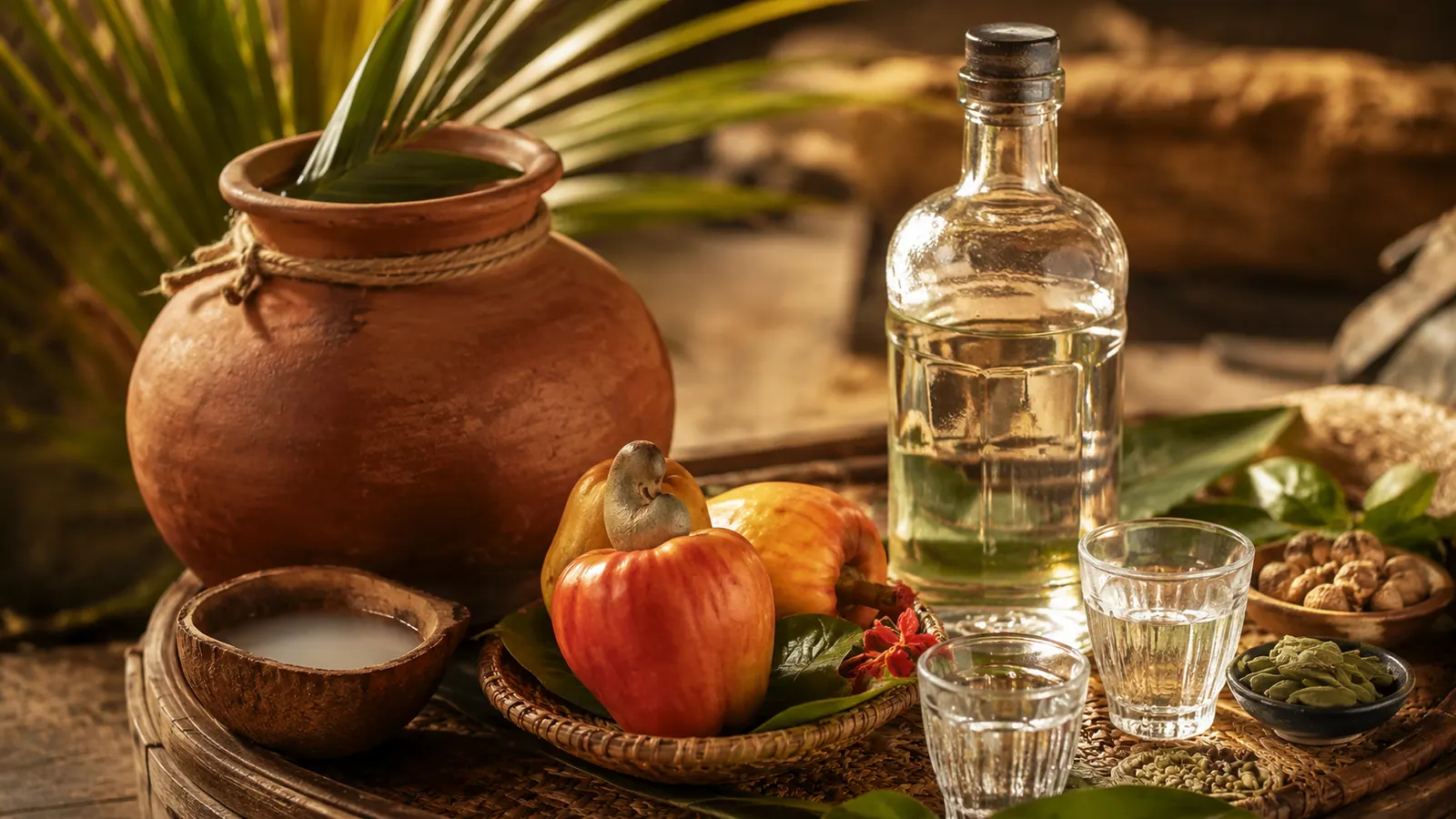
Feni is strongly associated with Goa and is made from local agricultural ingredients through regionally established practices. Cashew feni and coconut feni have different raw materials and can show different aromas and textures.
The important point for a newcomer is that feni is not just a generic spirit. Its identity comes from place, ingredient, and the people who keep the tradition visible.
Cashew feni vs coconut feni
Cashew feni is linked with the seasonal cashew fruit, while coconut feni is connected with coconut palm sap. The raw material changes the character of the drink and the cultural context in which it is discussed.
Descriptions should be read as a starting point. Local examples can vary, and a product listing may not capture every detail of a small regional producer.
Toddy and palm sap traditions
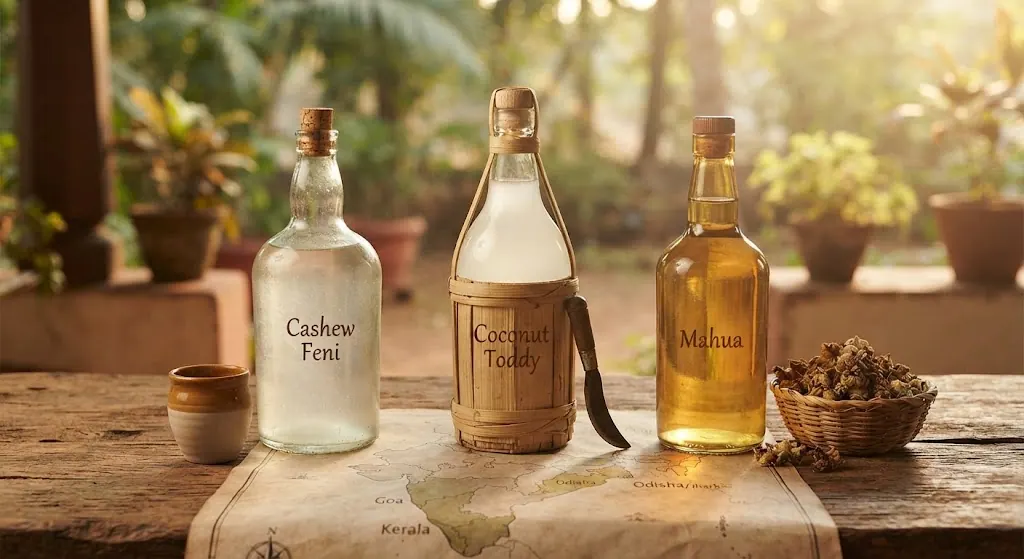
Toddy is traditionally linked with palm sap tapping and with food and social practices in parts of Kerala and other coastal regions. Freshness, local handling, and the timing between collection and serving can matter greatly to how it is understood.
Toddy is therefore best approached as both a drink and a regional practice. It should not be reduced to a party shortcut or treated as interchangeable with every palm-based beverage.
Why freshness and local rules matter
Regional drinks can be particularly sensitive to local production, storage, and availability. A description from one place should not be assumed to apply identically to every example elsewhere.
Alcohol rules, permitted sale, serving customs, and age requirements vary by state and region. Check current local guidance and the information supplied by a legitimate local source.
How to approach regional drinks responsibly
Ask what the drink is made from, how it is traditionally served, and how the current example was sourced. Try a small measured serving and pay attention to aroma, texture, and finish rather than drinking quickly.
If a product is unfamiliar or the source is unclear, do not treat a confident description as proof of authenticity. Discovery should include caution.
Why PourBud Alcohol Atlas matters
The Alcohol Atlas is designed to put drinks into regional and cultural context. It can help a reader move from a name on a menu to a better understanding of ingredients, place, and local stories.
It is still an educational reference. PourBud does not sell or deliver regional alcohol, and live availability or legality should be confirmed locally.
Regional drinks are not party shortcuts
A traditional drink may have a story that deserves time and respect. Serving it responsibly means avoiding pressure, explaining what is being served, providing water and food, and allowing guests to choose a non-alcoholic alternative.
The most respectful way to explore regional alcohol is slowly, with attention to culture and local rules.